How to Dispose of Disposable Vapes Safely and Legally in Arizona
A practical 2026 guide for consumers, vape shops, smoke lounges, and retailers that need a safer, documented way to manage disposable vape devices and lithium-ion battery waste.
Disposable Vapes Are One of America’s Fastest-Growing Waste Problems
Every second, roughly a dozen disposable vapes are thrown away in the United States. That adds up to millions per day and billions per year, with most devices ending up in trash bags, dumpsters, curbside recycling bins, or on the ground.
Each disposable vape contains a lithium-ion battery, nicotine e-liquid residue, plastics, circuitry, and metals such as nickel, lead, and cadmium. When a device is crushed inside a garbage truck, compacted at a transfer station, or damaged in a sorting facility, the battery can short, overheat, and ignite.
This guide explains how to dispose of disposable vapes correctly, whether you are a consumer with several dead pods in a drawer or a vape shop, smoke lounge, or retailer generating hundreds of used devices each week.
The rules are the same for everyone: disposable vape devices should not go into household trash or curbside recycling. The difference for businesses is that the volume, documentation, storage, and compliance risks are much greater.
What Is Actually Inside a Disposable Vape?
Before disposing of a vape correctly, it helps to understand what you are holding. A disposable vape combines several different materials, each of which presents its own handling concern.
Lithium-Ion Battery
Small but energy-dense, and vulnerable to fire if crushed, punctured, overheated, or improperly stored.
Heating Coil and Wick
Often made with nichrome, kanthal, or stainless steel and may contain trace amounts of nickel.
E-Liquid Residue
May contain nicotine salts, propylene glycol, vegetable glycerin, and flavoring chemicals.
Plastic Housing
Typically made from ABS, polycarbonate, or other mixed plastics that require specialized recovery.
Circuit Board
Contains sensors and electronic components that may include lead, cadmium, and other trace metals.
Because vape devices contain both batteries and chemical residue, they require controlled collection and downstream processing rather than ordinary household disposal.
Why Vapes Should Not Go in Trash or Curbside Recycling
Two features make disposable vapes different from ordinary consumer packaging: the lithium-ion battery and the residual chemical material inside the device.
Fire Risk
Batteries can short when crushed or punctured. One damaged vape can ignite nearby paper, cardboard, plastics, or other batteries inside a truck or sorting facility.
Regulated Waste
Vape batteries and chemical residue may fall under federal and state hazardous or universal waste requirements that govern collection, labeling, storage, and transportation.
Chemical Contamination
Nicotine residue and metals from the coil, board, and battery may contaminate soil, water, or other recyclable materials if disposed of incorrectly.
What Not to Do With a Disposable Vape
- Do not place disposable vapes in kitchen trash, dumpsters, or curbside recycling bins.
- Do not attempt to cut open or disassemble the device to remove the battery yourself.
- Do not throw a vape into a fireplace, fire pit, burn barrel, or any other heat source.
- Do not flush pods, cartridges, or remaining e-liquid down a sink or toilet.
- Do not leave used devices in a hot vehicle, direct Arizona sunlight, or an unprotected cardboard box.
How to Dispose of a Disposable Vape as an Individual
Consumers with a small number of dead or unwanted devices have several disposal options. These methods are listed from the most reliable and convenient to the least consistent.
Use a Certified Vape and Battery Collection Program
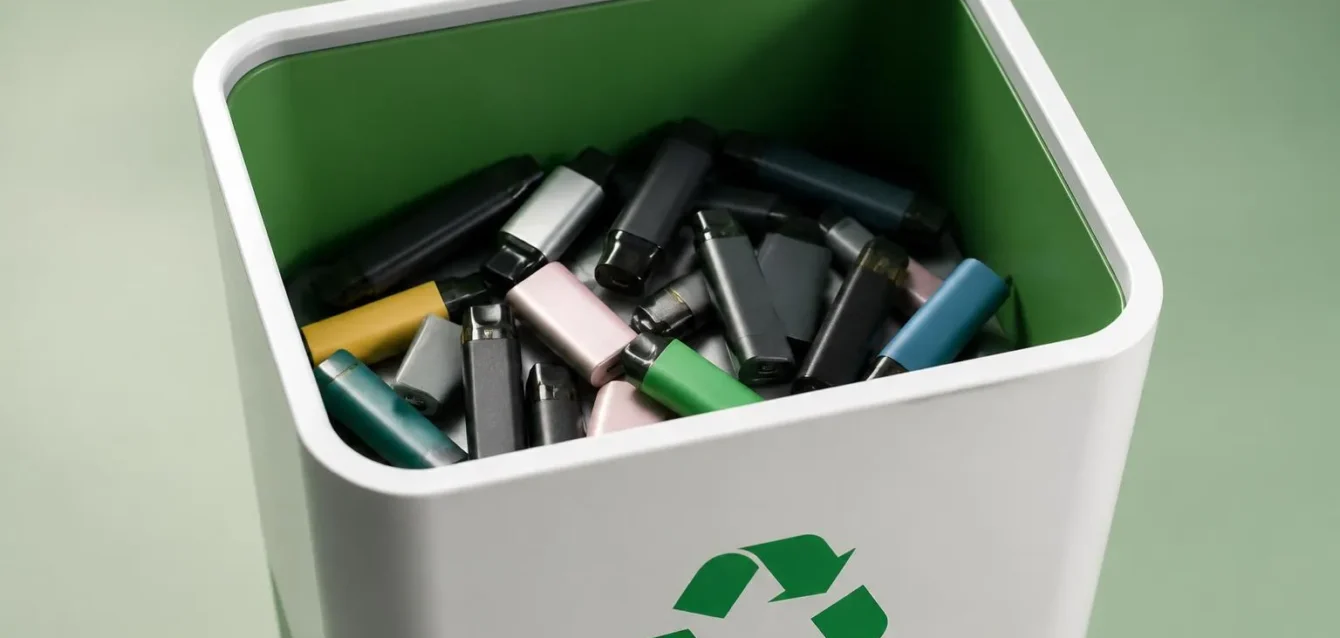
Programs such as Cloud Cycle place designated collection bins at participating shops, lounges, and retailers. Used disposable pens, pods, cartridges, and batteries can be dropped off for controlled handling and downstream recycling.
Attend a Household Hazardous Waste Event
Many Arizona municipalities offer periodic household hazardous waste collection for batteries, electronics, and related materials. Bring devices in a rigid container and check your city’s acceptance rules before attending.
Ask About Retailer or Manufacturer Take-Back
Some shops and manufacturers accept used devices. Availability varies, so ask whether the program uses a qualified downstream recycler and whether intact devices are accepted.
Review Mail-Back Program Rules Carefully
Some national battery recycling programs accept lithium-ion cells by mail, but many are intended for loose batteries rather than intact vape devices containing residual e-liquid.
How Businesses Should Handle Disposable Vape Waste
A business that generates defective devices or accepts used vapes from customers assumes additional storage, handling, documentation, and fire-safety responsibilities.
Legal Responsibility
Devices accepted from customers or removed from inventory should be managed through a compliant waste collection and recycling process rather than ordinary trash disposal.
Staff and Property Safety
Loose vapes stored in bags, cardboard boxes, or unprotected plastic tubs may create a battery fire risk if one device is damaged or overheated.
Documentation
Regulators, insurance carriers, property managers, and franchisors may ask businesses to demonstrate where regulated waste went and how it was handled.
Customer Trust
A visible collection program shows customers that the business is taking practical steps to reduce battery fires, litter, and unnecessary landfill waste.
Disposable Vape Disposal Methods Compared
| Disposal Method | Legal? | Fire Safe? | Convenient? | Documented? |
|---|---|---|---|---|
| General Trash | No | No | Yes | No |
| Curbside Recycling | No | No | Yes | No |
| Household Hazardous Waste Event | Yes | Yes | Occasional | Limited |
| Retailer Take-Back | Sometimes | Yes | Varies | Limited |
| Certified Cloud Cycle Collection | Yes | Yes | Yes | Yes |
What Happens After Certified Collection?
After Cloud Cycle picks up used devices, the material moves through a documented recovery process designed around a zero-landfill goal.
Sorting
Devices are separated by type, size, construction, and battery chemistry.
Battery Removal
Lithium-ion cells are discharged, extracted, and sent to qualified downstream processors.
Plastics Recovery
Device housings are separated and prepared for reuse or industrial material recovery.
Metals Recovery
Steel, aluminum, copper, and recoverable trace metals are refined for future manufacturing.
Residue Processing
Remaining e-liquid residue is handled through facilities equipped for chemical waste.
A documented chain of custody gives businesses a record showing that collected vape devices were transported and processed through the appropriate downstream channels. Cloud CycleArizona Business Compliance
Arizona Vape Waste Compliance Snapshot
Businesses selling or accepting disposable vapes may need to consider several overlapping federal, state, transportation, and local fire-safety frameworks.
EPA Resource Conservation and Recovery Act: Federal rules governing hazardous waste generation, storage, transportation, and disposal.
EPA Universal Waste Rule: A streamlined management framework that applies to many common battery and hazardous material streams.
Arizona Department of Environmental Quality: Arizona’s implementation and enforcement of applicable hazardous waste requirements.
U.S. Department of Transportation Rules: Packaging and transportation requirements that apply to lithium-ion batteries and regulated waste shipments.
Local Fire Codes: Storage and fire-prevention standards that may apply when a business accumulates used or damaged battery-powered devices.
Cloud Cycle’s program is designed to help participating businesses manage collection, pickup, downstream recycling, and documentation without building an in-house environmental waste program.
Common Disposal QuestionsFrequently Asked Questions
Are disposable vapes considered hazardous waste?
Discarded vape devices contain lithium-ion batteries and chemical residue that require controlled handling. Depending on the generator and circumstances, the waste may be managed under hazardous or universal waste requirements.
Can I recycle a disposable vape at a big-box store?
Many retail battery kiosks are designed for loose batteries, not intact vape devices containing e-liquid. Acceptance varies, so confirm the program’s rules before dropping off a vape. A vape-specific collection program or household hazardous waste event is generally more appropriate.
What happens to the nicotine residue inside the device?
A qualified collection and downstream processing program can handle intact devices containing residual liquid. The remaining chemical material is separated or neutralized through facilities equipped for that waste stream.
Can a vape shop be fined for improper disposal?
Improper battery or cartridge disposal may create environmental and fire-code exposure. Businesses should maintain a clear collection, storage, pickup, and documentation process rather than placing devices into ordinary trash.
What should I do with a swollen or damaged vape?
Do not place it in trash or recycling and do not attempt to disassemble it. Keep it away from heat and combustible materials in a non-flammable container, then contact a qualified collector or local household hazardous waste program for instructions.
Do I need to remove the battery before recycling?
No. A vape-specific collection program can accept the complete device. Taking it apart yourself may puncture the battery or expose you to residual nicotine liquid.
How can my shop or lounge start a collection program?
Contact Cloud Cycle to learn about the Pilot Program. Participating businesses can receive a designated collection bin, recurring pickups, downstream recycling, and disposal documentation.
Ready to Start a Safer Vape Collection Program?
Cloud Cycle partners with vape shops, smoke lounges, and retailers across Arizona to provide collection bins, flexible recurring pickups, safer transportation, downstream recycling, and documented chain of custody.
About Cloud Cycle
Cloud Cycle is Arizona’s first dedicated vape waste and lithium-ion battery collection service. Founded by Phoenix native Breland Johnson, the company works with vape shops, smoke lounges, and retailers to provide safer collection, recurring pickups, downstream material recovery, and disposal documentation.