Vape Recycling Program for Arizona Retailers: Setup & Benefits
A practical guide to installing collection bins, training your retail staff, and managing scheduled pickups in Mesa, Phoenix, and statewide.
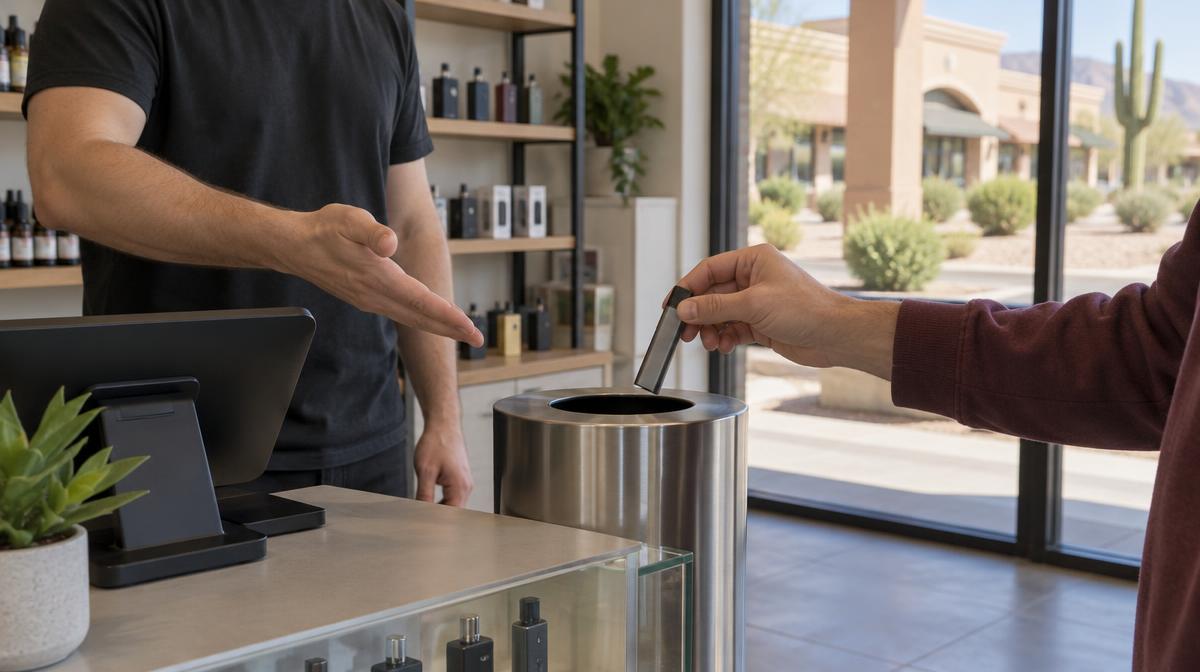
Why Your Store Needs a Formal Collection Plan
Customers want a safe place to drop off empty devices. If you do not offer one, those devices end up in your parking lot or regular trash. Establishing a vape recycling program Arizona retailers can rely on solves this operational problem.
Providing a drop-off location drives foot traffic back to your shop. It prevents hazardous battery fires in your dumpsters. This guide covers how to select the right bins, train your retail staff, handle collected items safely, and schedule reliable pickups with a local service provider.
Are you an individual trying to dispose of a personal device? Read Cloud Cycle’s consumer disposal guide instead. This article is strictly for business owners and retail managers.
What Makes a Vape Recycling Program for Retailers Successful
A functional system requires more than placing a plastic bucket near the register. You must manage the waste flow from the moment a customer drops a device to the moment it leaves your property.
Secure Receptacles
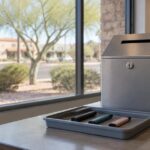
Use designated, highly visible bins that keep discarded items fully contained and out of reach.
Clear Protocols
Train your employees on exactly what materials to accept and how to handle damaged units safely.
Reliable Handoff
Schedule recurring pickups with an authorized provider to prevent dangerous back-room accumulation.
Choosing Vape Recycling Bins for Stores
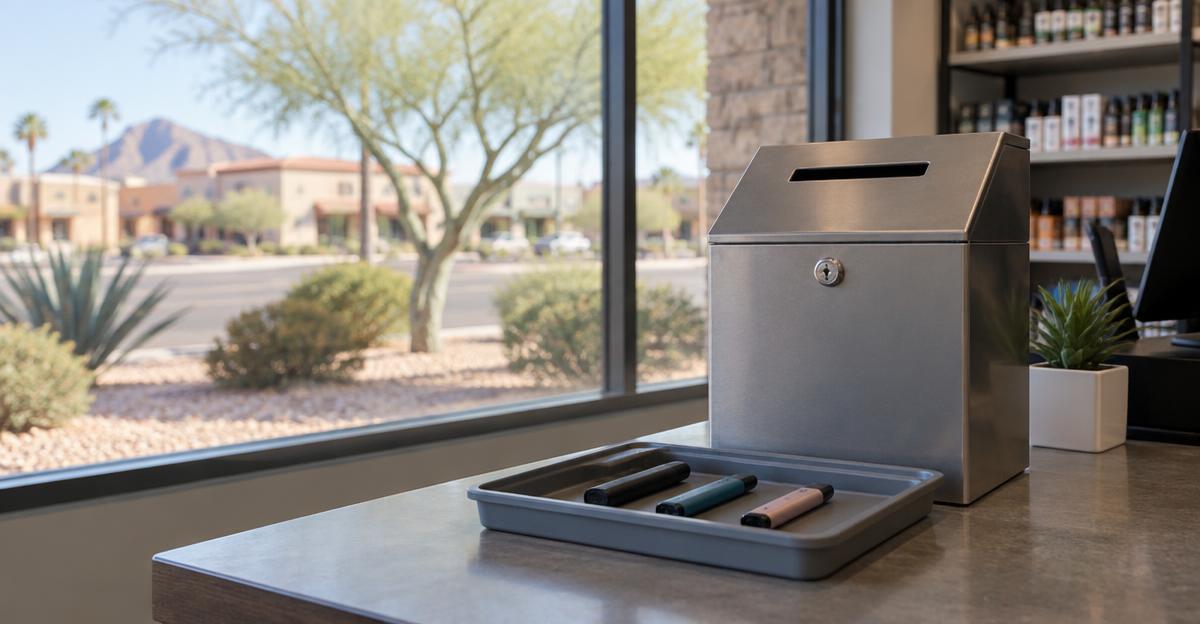
The collection hardware you choose dictates how safe and clean your retail floor remains. Purpose-built bins cost between $50 and $150 each, depending on size and construction.
Restricted Openings
A narrow drop slot prevents customers from reaching inside and removing discarded items.
Transparent Panels
Clear materials or front windows allow staff to monitor fill levels quickly without opening the container.
Secure Lids
Locking lids protect against tampering and keep the contents secure during busy shifts.
Sturdy Construction
Choose heavy-duty plastics or metal designs that resist tipping and provide basic fire containment.
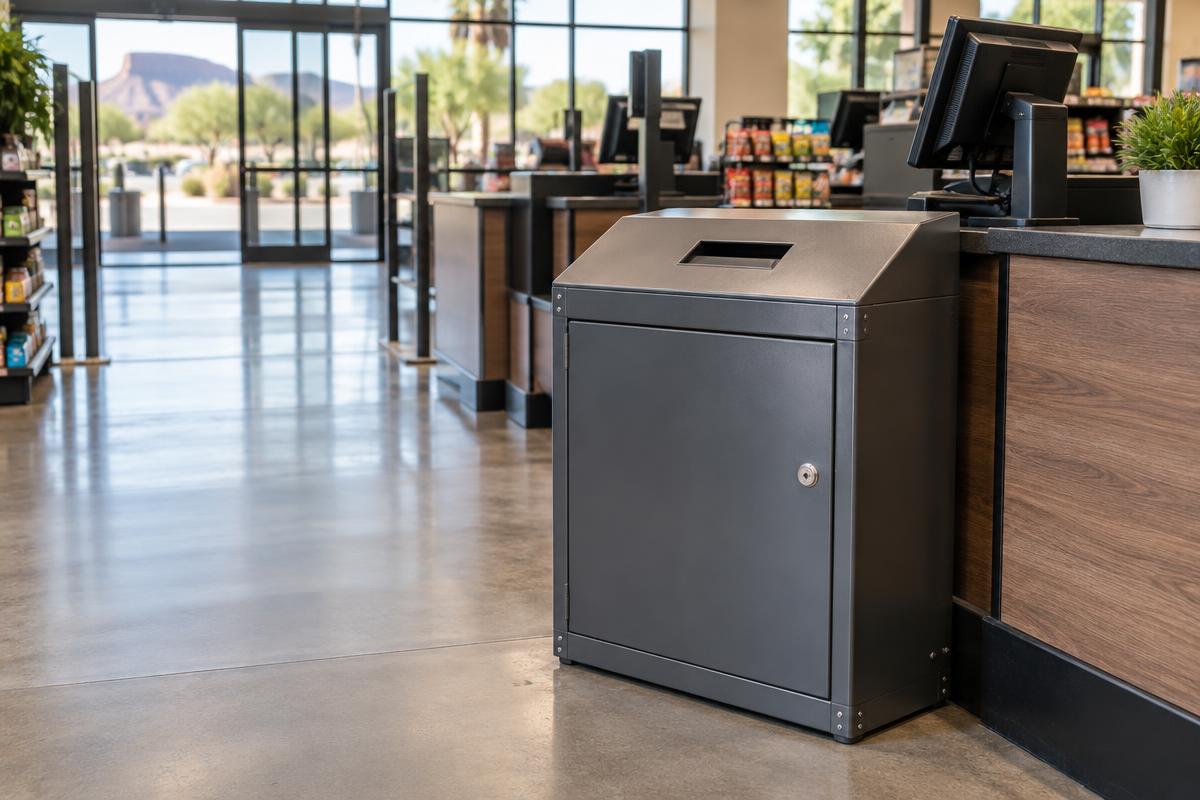
Where to Place Your Collection Bins
Your bin location affects customer participation rates and overall store safety. Keep all collection boxes indoors.
| Location | Pros | Cons |
|---|---|---|
| Front Counter | High visibility. Staff can easily monitor drops and answer questions. | Takes up valuable retail space near the register. |
| Store Entrance | Highly convenient for quick, in-and-out drop-offs. | Higher risk of tampering. Harder for cashiers to monitor. |
| Dedicated Back Kiosk | Keeps clutter away from the checkout line. Forces customers to walk through the store. | Customers might miss the bin if signage is poor. |
Storing collected devices outdoors or in direct sunlight during an Arizona summer creates a massive fire hazard. Always keep your primary collection bins in a climate-controlled environment.
The golden rule of placement: Keep your bins away from direct heat sources, open windows, and highly flammable product displays.
Common Mistakes Retailers Make with Collection Bins
- Letting bins overflow past their rated capacity.
- Storing collected devices in outdoor sheds or uncooled garages.
- Allowing customers to drop off visibly leaking or smoking devices into the main bin.
- Instructing staff to dismantle vapes or remove batteries manually.
- Emptying collected vapes into regular commercial dumpsters behind the store.
4 Steps to Launch Your Store Program
Setting up your process takes a few hours of planning but saves significant time on daily operations.
Order Compliant Bins
Select designated containers with restricted drop slots and secure lids.
Establish a Storage Area
Dedicate a specific, climate-controlled shelf in your back room to hold full bags or secondary containers.
Train Your Staff
Teach your employees what items to accept, what to reject, and how to record the volume accurately.
Schedule Recurring Pickups
Partner with a local provider to remove the volume on a predictable schedule before it piles up.
How Staff Should Handle Drop-Offs
Inspect
Look for severe swelling, burn marks, or active leaks before accepting the device.
Direct
Show the customer to the bin and allow them to drop the device in.
Monitor
Check fill levels during every shift change.
Transfer
Move full bags carefully to the designated back-room storage area.
Log
Record the date and estimated volume to track your overall store collection data.
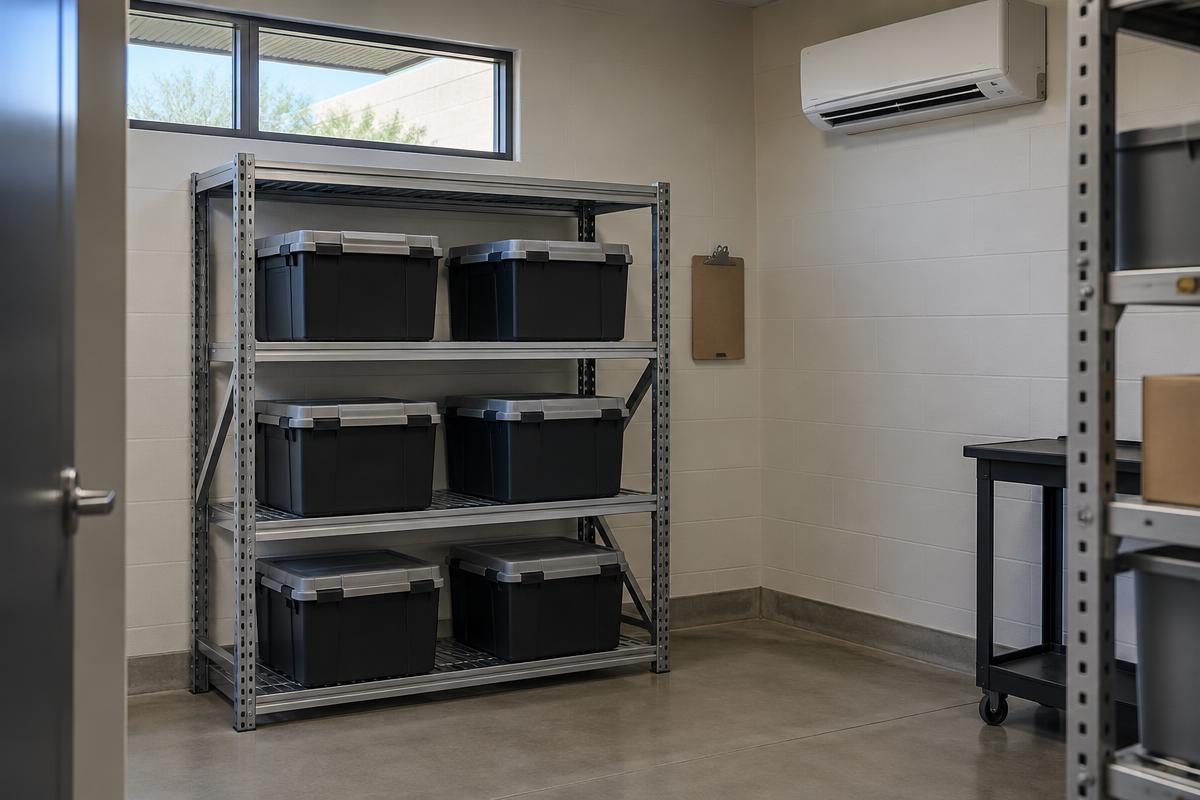
Safety Rules for Back-Room Storage
Retailers must secure collected items between vendor pickups. Establish clear rules for the back room.
Climate control: Store all collected devices in a dry, temperature-controlled room.
Isolate damage: Bag cracked or swollen devices individually in clear plastic.
Elevation: Keep storage boxes off the floor to prevent accidental water damage during cleaning.
Terminal protection: Tape the terminals of any loose lithium batteries dropped in the bin.
Questions to Ask Your Collection Partner
Your program relies heavily on the vendor removing the waste. Ask direct questions before signing a service agreement.
| Question to Ask | Why It Matters | What You Should Verify |
|---|---|---|
| Do you service my exact zip code? | Logistics determine reliability. A vendor across the state will miss pickups. | Confirm they have regular routes in your specific city or metro area. |
| What materials do you accept? | Vape shops generate mixed waste streams. You need to know if e-liquid bottles are allowed. | Get a written list of accepted devices, loose batteries, and packaging. |
| How often are your pickups? | Fast-paced retail stores generate volume quickly. Accumulation creates liability. | Ensure they offer weekly, bi-weekly, or monthly stops based on your foot traffic. |
| Do you provide collection records? | You need a paper trail proving the material left your property safely. | Ask for a sample of the documentation provided after each pickup. |
A successful collection program turns a waste problem into a reason for customers to visit your store again. It proves you care about the community and the physical environment.Cloud CycleCommon Retailer Questions
Frequently Asked Questions
How much does it cost to set up vape recycling bins for stores?
Initial hardware costs range from $50 to $150 per bin. Pickup services typically charge a flat monthly fee or a per-pickup rate based on your volume and location.
Where should we place the collection bin?
Place it indoors, in a climate-controlled area, visible to staff. The front counter or a supervised lobby area works best to prevent unauthorized tampering and monitor drop-offs.
Can we accept damaged or swollen vapes from customers?
Staff should handle damaged devices with extreme caution. Isolate them immediately in a clear plastic bag or a designated fire-retardant container away from other items. Do not put them in the main customer drop-off bin.
How often should we schedule pickups?
Schedule pickups based strictly on your customer volume. High-traffic shops usually require bi-weekly or monthly scheduled pickups to prevent excessive back-room accumulation.
Start Your Store Collection Program with Cloud Cycle
Managing in-store collection is easier when you partner with a specialized local service. Cloud Cycle provides the hardware, scheduled pickups, and reliable documentation retail stores need to operate safely. We currently service Mesa, AZ, and surrounding areas.